
Wednesday, January 22, 2014
Dermalogica's super rich repair
A super-concentrated, heavyweight cream that combats chronically dry, dehydrated and prematurely-aging skin conditions. As the richest Dermalogica Moisturizer, it soothes, hydrates and replenishes even the thirstiest skin while acting as a protective salve to fight extreme cold and dry environmental conditions. Contains no artificial fragrance or color.

Saturday, January 18, 2014
dynamic skin recovery spf30
Encourage firmness, elasticity, and hydration while helping to defend against the primary causes of skin aging with this medium-weight, emollient daily moisturizer with SPF30. Contains no artificial fragrance or color.
Friday, December 27, 2013
GO beyond a Facial -- Dermalogica's Skin Treatment
Getting Facials, Ready to upgrade, learn more about Dermalogica’s Skin Treatment.
Tuesday, December 24, 2013
Organic Skin Care? What is the Real Hype?
Products without preservatives can easily be contaminated and thus prove harmful to the skin.
“Some bacteria can cause ulcerated corneas and blindness,” says Diana Howard, Ph.D., vice president of global education and research and development for Dermalogica and The International Dermal Institute. “Other bacteria can cause an infection in the skin if they find their way into the body via an open cut or acne lesion.”
Interested in reading the article ... check this Link out ...
http://www.americanspa.com/americanspa/spa-treatments/spoiler-alert
“Some bacteria can cause ulcerated corneas and blindness,” says Diana Howard, Ph.D., vice president of global education and research and development for Dermalogica and The International Dermal Institute. “Other bacteria can cause an infection in the skin if they find their way into the body via an open cut or acne lesion.”
Interested in reading the article ... check this Link out ...
http://www.americanspa.com/americanspa/spa-treatments/spoiler-alert
What is the Number one Skin care line Globally?
DERMALOGICA ... IS the number one Skin Care line Globally!
It is a Professional line, which means it has professional line and a retail line to support the services that you receive in the spa.
Estheticians Preferred!
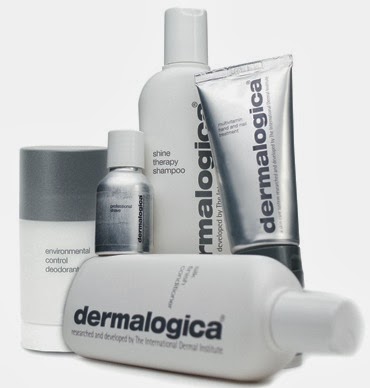
It is a Professional line, which means it has professional line and a retail line to support the services that you receive in the spa.
Estheticians Preferred!
Monday, December 23, 2013
Is a Man's Skin Really Different?
Is a Man's Skin Really Different?
by Dr. Diana Howard
The skin on a man versus that on a woman is significantly different. The ability to grow a beard is just one obvious distinction among many others that are not so evident. From a structural point of view, some of the differences include skin thickness, collagen density, loss of collagen as we age, texture and hydration. These differences in the skin may in fact create differences in the treatment room. Let’s look at each of these aspects in more detail.
Skin Thickness
We know that the thickness of the skin varies with the location, age and sex of the individual. Additionally, androgens (i.e. testosterone), which cause an increase in skin thickness, accounts for why a man’s skin is about 25 percent thicker than that of a woman’s. A man’s skin also thins gradually with age, whereas the thickness of a woman’s skin remains constant until about the age of fifty. After menopause, her skin will thin significantly, which will continue as she ages.
Collagen Density
Regardless of age, men have a higher collagen density than women; this is the ratio of collagen to the thickness of the skin. Researchers believe that the higher collagen density accounts for why women appear to age faster than men of the same age. When considering intrinsic (genetically-programmed) aging of the skin, it has been said that women are about 15 years older than men of the same age. Of course, the role of daylight exposure in skin aging, combined with the fact that men do not use sunscreen as often as women, may account for why we do not readily notice. Extrinsic aging from UV radiation can add years to a man’s skin and negate the benefit of slower intrinsic aging.
Loss of Collagen
The physical signs of aging in adults, such as wrinkles and laxity to the tissue, are closely related to the collagen content of the skin. Both men and women lose about one percent of their collagen per year after their 30th birthday. For women, however, this escalates significantly in the first five years after menopause then slows down to a loss of two percent per year.
Texture
From a superficial perspective, the texture of a man’s skin is very different than a woman’s. The texture (on a man) is rougher, and the Stratum Corneum is thicker. There is also a difference in the composition of sebum and its production. After puberty, sebum production is greater in males than in females, which is attributed to androgen secretions and accounts for why men have longer lasting acne. The cells in a man’s sebaceous glands have more positive receptors for androgens, which explains why they produce more sebum. Interestingly, redness, proliferation of the sebaceous glands and swelling of the skin on the nose, (a condition known as rhinophyma that is found in extreme cases of rosacea) is only seen in males. It is unknown if this condition is controlled by androgens in a similar capacity as sebum production.
Hydration
Puberty also stimulates the appearance of facial hair in men and gives rise to sweat secretions. Males have more Lactic Acid in their sweat, which accounts for a lower pH (.05 lower) when compared to female sweat. Men also sweat more than twice as much as women and are more prone to sweating, which is stimulated by an increase in body temperature. However, male skin appears to be better hydrated than women’s, which is fortunate, as men are less likely to apply a hydrating moisturizer to their body or face. Perhaps the excess sweating and production of Lactic Acid, a known natural humectant for the skin, is responsible for the level of tissue hydration.
Treating a Man’s Skin
The health of a man’s skin is, of course, just as important as that of a woman. But while treatment for a man sometimes differs from a woman, remember that the same amount of care must be taken regardless of the sex of the client. Even if the man appears to have tough, resilient skin, he may still have internal issues or surround himself in environments that sensitize him. In every instance, use the consultation card to familiarize yourself with the client, and never assume that a man needs any less gentle care than a woman.
shared from the Dermalogic.com site
by Dr. Diana Howard
The skin on a man versus that on a woman is significantly different. The ability to grow a beard is just one obvious distinction among many others that are not so evident. From a structural point of view, some of the differences include skin thickness, collagen density, loss of collagen as we age, texture and hydration. These differences in the skin may in fact create differences in the treatment room. Let’s look at each of these aspects in more detail.
Skin Thickness
We know that the thickness of the skin varies with the location, age and sex of the individual. Additionally, androgens (i.e. testosterone), which cause an increase in skin thickness, accounts for why a man’s skin is about 25 percent thicker than that of a woman’s. A man’s skin also thins gradually with age, whereas the thickness of a woman’s skin remains constant until about the age of fifty. After menopause, her skin will thin significantly, which will continue as she ages.
Collagen Density
Regardless of age, men have a higher collagen density than women; this is the ratio of collagen to the thickness of the skin. Researchers believe that the higher collagen density accounts for why women appear to age faster than men of the same age. When considering intrinsic (genetically-programmed) aging of the skin, it has been said that women are about 15 years older than men of the same age. Of course, the role of daylight exposure in skin aging, combined with the fact that men do not use sunscreen as often as women, may account for why we do not readily notice. Extrinsic aging from UV radiation can add years to a man’s skin and negate the benefit of slower intrinsic aging.
Loss of Collagen
The physical signs of aging in adults, such as wrinkles and laxity to the tissue, are closely related to the collagen content of the skin. Both men and women lose about one percent of their collagen per year after their 30th birthday. For women, however, this escalates significantly in the first five years after menopause then slows down to a loss of two percent per year.
Texture
From a superficial perspective, the texture of a man’s skin is very different than a woman’s. The texture (on a man) is rougher, and the Stratum Corneum is thicker. There is also a difference in the composition of sebum and its production. After puberty, sebum production is greater in males than in females, which is attributed to androgen secretions and accounts for why men have longer lasting acne. The cells in a man’s sebaceous glands have more positive receptors for androgens, which explains why they produce more sebum. Interestingly, redness, proliferation of the sebaceous glands and swelling of the skin on the nose, (a condition known as rhinophyma that is found in extreme cases of rosacea) is only seen in males. It is unknown if this condition is controlled by androgens in a similar capacity as sebum production.
Hydration
Puberty also stimulates the appearance of facial hair in men and gives rise to sweat secretions. Males have more Lactic Acid in their sweat, which accounts for a lower pH (.05 lower) when compared to female sweat. Men also sweat more than twice as much as women and are more prone to sweating, which is stimulated by an increase in body temperature. However, male skin appears to be better hydrated than women’s, which is fortunate, as men are less likely to apply a hydrating moisturizer to their body or face. Perhaps the excess sweating and production of Lactic Acid, a known natural humectant for the skin, is responsible for the level of tissue hydration.
Treating a Man’s Skin
The health of a man’s skin is, of course, just as important as that of a woman. But while treatment for a man sometimes differs from a woman, remember that the same amount of care must be taken regardless of the sex of the client. Even if the man appears to have tough, resilient skin, he may still have internal issues or surround himself in environments that sensitize him. In every instance, use the consultation card to familiarize yourself with the client, and never assume that a man needs any less gentle care than a woman.
shared from the Dermalogic.com site
Saturday, December 21, 2013
To Paraben or Not to Paraben
Since I have been asked this QUESTION... I thought I would share this article by Dr. Diana Howard, She is with Dermalogica and explains it this way...
“To Paraben or Not to Paraben”
by Dr. Diana Howard
For years, parabens have been considered the mildest and most commonly used of all preservatives available to the cosmetic formulator. They are found not only in cosmetics, but in food and medicines as well. In the past five years, numerous claims have circulated, leading to extremely negative reactions to the use of Parabens in cosmetics. But are these claims true? When evaluating studies, one has to question the concentration of parabens that were tested and the way they were used – topically, by injection or orally. Most of the studies are of the latter two, which are not indicative of topical exposure, nor are they indicative of the concentrations generally found in a cosmetic product.
When used in cosmetics, parabens exist in concentrations of less than one percent. Furthermore, the Final Report on the Safety Assessment of parabens indicates that, “the parabens are non- toxic, non mutagenic, non carcinogenic, practically non irritating and non sensitizing in the human population with normal skin.” The overall conclusion is that parabens are safe to use in cosmetic products at the concentrations generally used. When compared to most other preservatives, parabens have an excellent safety record.
The bad press on Parabens stems from the publication of a report entitled Concentration of Parabens in Human Breast Tumors, by P. D. Darbre in the Journal of Applied Toxicology 24:5-13 (2004). In summary, the authors claim that parabens from deodorants mimic estrogen, which causes breast cancer. However, peer reviews indicate that the study does NOT find a causal link between underarm products containing parabens and breast cancer; furthermore, scientists state that only 20 individuals were in the study and no control group was analyzed.
What’s more, scientists were quick to point out that extensive independent research has previously shown that esterase III, a skin enzyme found in keratinocytes, completely hydrolyses topically applied parabens to harmless substances that cannot pose any risk of cancer (Biol. Chem 377 (1):647, 1996). Even the researchers involved with the original Darbre work admitted that they could not prove where the parabens came from in their study – they could have been from food or medicines and not cosmetics.
The Cosmetic, Toiletry, and Fragrance Association (CTFA) issued a statement defending the safety of parabens and maintains that the Darbre study is “very preliminary and based on a small sample size with inconsistent results. A wealth of data supports the safety of parabens.” Dr. Chris Fowler of the Cosmetic, Toiletry, and Perfumery Association (CTPA) stated that, “Parabens are officially approved for use under the Cosmetics Directive (76/768/EEC), the European legislation that regulates all cosmetics and toiletries. We can reassure the public that all cosmetic and toiletry products containing parabens may continue to be used safely.”
One source states that, “To date, numerous studies have recently provided new data on
parabens suggesting no adverse hormonal effect on the body” (Cosmetics design-europe.com (Nov. 18 2009). And the author of the study that triggered the concern over parabens even said “larger studies are needed to give more representative values for body burdens in different tissues and across the human population.” Additional studies are underway, which should better assess the impact of parabens on human health and find whether paraben accumulation from currently permitted levels in cosmetics, foods and pharmaceuticals remains acceptable.
“To Paraben or Not to Paraben”
by Dr. Diana Howard
For years, parabens have been considered the mildest and most commonly used of all preservatives available to the cosmetic formulator. They are found not only in cosmetics, but in food and medicines as well. In the past five years, numerous claims have circulated, leading to extremely negative reactions to the use of Parabens in cosmetics. But are these claims true? When evaluating studies, one has to question the concentration of parabens that were tested and the way they were used – topically, by injection or orally. Most of the studies are of the latter two, which are not indicative of topical exposure, nor are they indicative of the concentrations generally found in a cosmetic product.
When used in cosmetics, parabens exist in concentrations of less than one percent. Furthermore, the Final Report on the Safety Assessment of parabens indicates that, “the parabens are non- toxic, non mutagenic, non carcinogenic, practically non irritating and non sensitizing in the human population with normal skin.” The overall conclusion is that parabens are safe to use in cosmetic products at the concentrations generally used. When compared to most other preservatives, parabens have an excellent safety record.
The bad press on Parabens stems from the publication of a report entitled Concentration of Parabens in Human Breast Tumors, by P. D. Darbre in the Journal of Applied Toxicology 24:5-13 (2004). In summary, the authors claim that parabens from deodorants mimic estrogen, which causes breast cancer. However, peer reviews indicate that the study does NOT find a causal link between underarm products containing parabens and breast cancer; furthermore, scientists state that only 20 individuals were in the study and no control group was analyzed.
What’s more, scientists were quick to point out that extensive independent research has previously shown that esterase III, a skin enzyme found in keratinocytes, completely hydrolyses topically applied parabens to harmless substances that cannot pose any risk of cancer (Biol. Chem 377 (1):647, 1996). Even the researchers involved with the original Darbre work admitted that they could not prove where the parabens came from in their study – they could have been from food or medicines and not cosmetics.
The Cosmetic, Toiletry, and Fragrance Association (CTFA) issued a statement defending the safety of parabens and maintains that the Darbre study is “very preliminary and based on a small sample size with inconsistent results. A wealth of data supports the safety of parabens.” Dr. Chris Fowler of the Cosmetic, Toiletry, and Perfumery Association (CTPA) stated that, “Parabens are officially approved for use under the Cosmetics Directive (76/768/EEC), the European legislation that regulates all cosmetics and toiletries. We can reassure the public that all cosmetic and toiletry products containing parabens may continue to be used safely.”
One source states that, “To date, numerous studies have recently provided new data on
parabens suggesting no adverse hormonal effect on the body” (Cosmetics design-europe.com (Nov. 18 2009). And the author of the study that triggered the concern over parabens even said “larger studies are needed to give more representative values for body burdens in different tissues and across the human population.” Additional studies are underway, which should better assess the impact of parabens on human health and find whether paraben accumulation from currently permitted levels in cosmetics, foods and pharmaceuticals remains acceptable.
Subscribe to:
Posts (Atom)